Signal 02 / Cargo condition
Listen to cargo conditions
A sensor measures something specific, somewhere specific. Its value grows when you understand its placement, its clock and the path between the measurement and your screen.
Read the sensing checks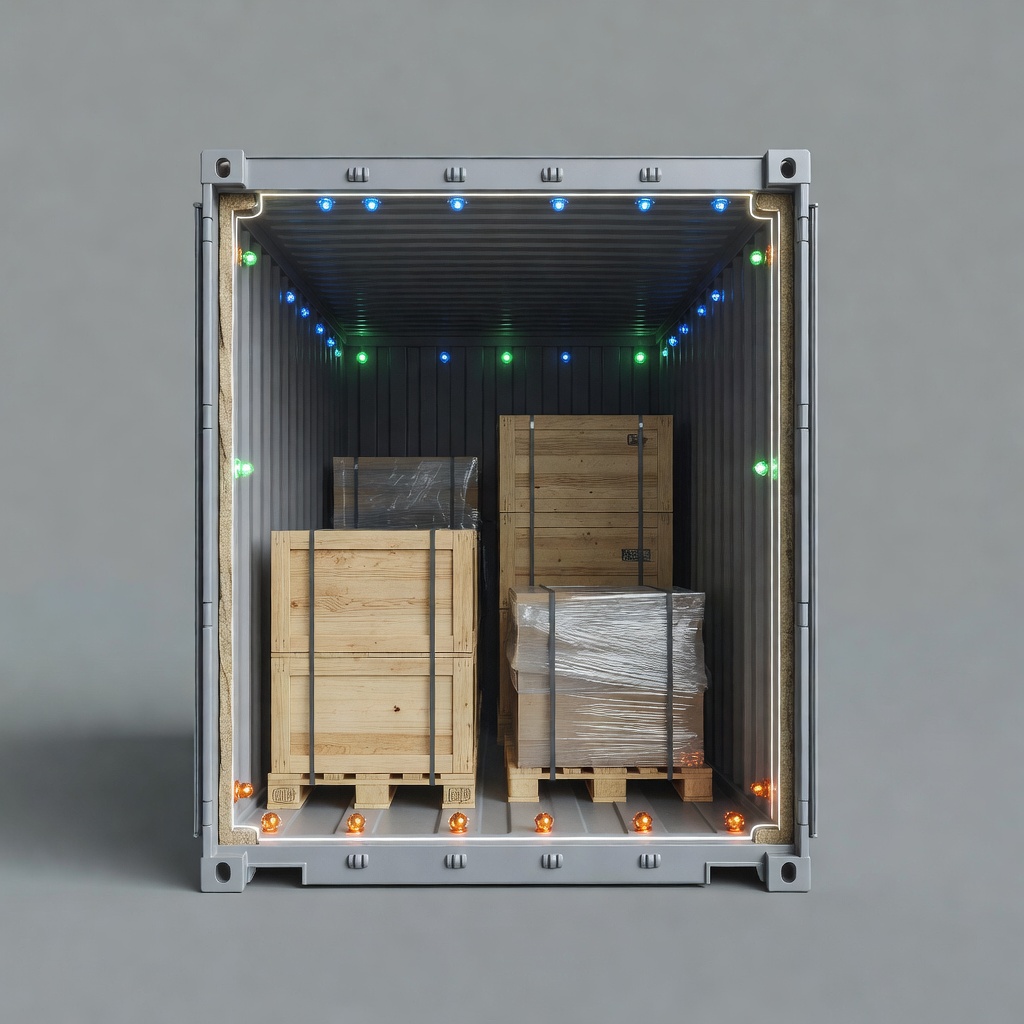
Start with the measured quantity
Container monitoring devices can measure temperature, relative humidity, acceleration, light or a door-switch state. Some combine several channels with a location receiver and a radio. These channels answer different questions. A temperature probe describes temperature near the probe; an accelerometer records changes in motion at its mounting point. Neither automatically describes the state of every package.
A refrigerated container may also provide machinery telemetry. Supply-air temperature, return-air temperature and the controller’s set point are distinct values. A set point is an instruction to the equipment, not a direct measurement of product temperature. Before discussing an excursion, establish exactly which channel is displayed, its unit, its source and the conditions under which it was recorded.
Placement changes the meaning
Airflow, packaging, load arrangement and proximity to a door can produce different readings within the same container. A device attached to an internal wall may respond differently from a probe placed within a product or pallet. A sensor outside the load can help describe the surrounding environment without representing the product’s core temperature.
Placement should follow the cargo owner’s requirements and any applicable validated procedure. Record the location and device identifier during installation, and keep that association with the container record. If someone later moves the device, the history needs to reflect the change. Without this context, a smooth graph can look reassuring while answering the wrong question about the cargo.
Separate sampling from reporting
The sampling interval determines how often a device takes a measurement. The reporting interval determines how often it attempts to transmit information. These intervals can differ substantially. A logger might store observations locally while communications are unavailable and upload them later. That later upload does not mean the conditions occurred at the moment they appeared on a dashboard.
Keep measurement time and receipt time distinct. Confirm the time zone, clock synchronisation and whether the display shows raw observations or summarised values. A daily minimum and maximum can reveal a range but conceal the sequence and duration of changes. Missing samples should remain visible as missing information, rather than being silently interpreted as stable conditions or a normal journey.
Expect radio coverage to vary
Steel containers, stacked equipment and terminal structures can weaken radio signals. Cellular coverage depends on the network, roaming arrangements and the device’s supported services. Satellite communication has different coverage and antenna requirements; it is not a guarantee of an uninterrupted connection inside a stack or building. Short-range technologies may depend on a nearby gateway.
Bluetooth Low Energy and LoRaWAN are examples of technologies that can support particular monitoring designs, not universal substitutes for each other. Battery life, reporting frequency and radio conditions interact. Ask whether a device stores readings when disconnected and how it identifies a delayed upload. A communications gap establishes uncertainty about visibility; it does not, by itself, establish cargo loss or device failure.
Treat an alert as a request to investigate
An alert usually applies a rule to incoming data. That rule might involve a threshold, a duration or a combination of observations. Useful limits come from the product requirements and approved operating procedure, not from a generic value chosen for all cargo. An alert without an identified owner or response process can add noise without improving handling.
Check whether the excursion is sustained, whether the device was correctly installed and whether the sensor is within its calibration period. Calibration provides information about measurement performance under specified conditions; it does not eliminate all uncertainty. A shock alert requires similar care: mounting, orientation and sampling affect the result. Investigating a signal is different from concluding that damage has occurred.
Turn measurements into a useful record
A practical condition record includes the device identity, container association, sensor channel, units, timestamps and known gaps. Preserve the original data when possible, along with relevant installation and calibration information. If a chart has been filtered or summarised, keep that transformation clear. Someone reviewing a claim or exception later needs to understand how the displayed account was produced.
For food or pharmaceutical cargo, follow the applicable quality system and qualified specialist advice. This guide is not a product-release decision or a substitute for a validated cold-chain procedure. Your immediate operational task is to identify the evidence, communicate uncertainty and route the exception to the responsible person. Next, connect those condition observations to the movement events that give the journey its sequence.
Next: locate the meaningful event →Reference points
The World Health Organization publishes guidance relevant to temperature-sensitive health products. The GS1 standards community provides frameworks for identification and event information. Consult the rules and procedures applicable to your actual cargo.